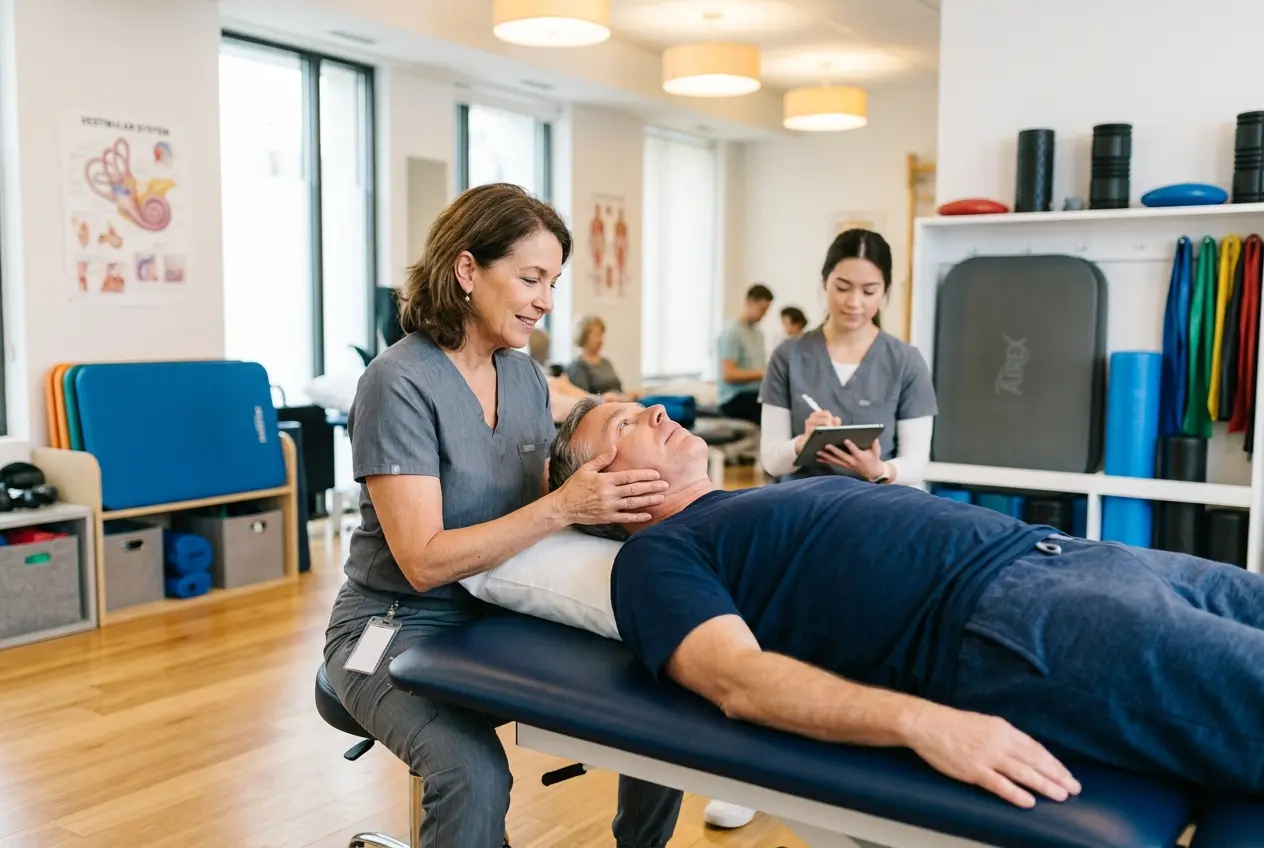
Boise's variable elevation changes—from the flat Greenbelt to hilly neighborhoods like the Bench—can challenge those with vertigo or balance disorders. Our vestibular program helps patients navigate these environments confidently.
We treat conditions like BPPV (common in older adults in retirement communities), post-concussion dizziness (from youth sports or mountain biking falls), and Meniere's disease. Using techniques adapted from ski patrol training, we gradually expose patients to head movements that simulate real-world scenarios—like looking up at the Idaho State Capitol dome or scanning for traffic while crossing busy downtown intersections. Home exercises incorporate household items readily available in local stores.
We treat conditions like BPPV (common in older adults in retirement communities), post-concussion dizziness (from youth sports or mountain biking falls), and Meniere's disease. Using techniques adapted from ski patrol training, we gradually expose patients to head movements that simulate real-world scenarios—like looking up at the Idaho State Capitol dome or scanning for traffic while crossing busy downtown intersections. Home exercises incorporate household items readily available in local stores.
Our Process
- 01 Step 1: Detailed dizziness history and positional testing
- 02 Step 2: Customized habituation exercises
- 03 Step 3: Balance training on varied surfaces
- 04 Step 4: Community reintegration strategies
Benefits
- Reduced vertigo episodes
- Improved safety on uneven terrain
- Confidence in crowded spaces
- Fewer falls at home
Frequently Asked Questions
I get dizzy driving on the Connector—can you help?
Yes, visual-vestibular conflicts on elevated roadways are common. We'll train your system to handle these motions more comfortably.
How long until I see improvement?
Most patients notice some change within 2-3 weeks, though complete resolution may take longer depending on your condition's complexity.